
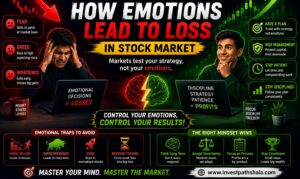
The Stock Market Is More Psychological Than Financial
Most people think stock market success depends only on knowledge.
But in reality, emotions decide profits and losses more than strategies do.
Fear.
Greed.
Impatience.
Overconfidence.
These emotions silently destroy portfolios every day.
The market tests your mindset before rewarding your money.
How Fear Creates Losses
When markets fall, beginners panic.
They sell quality investments at a loss because they fear prices will fall further.
This is called panic selling.
But experienced investors understand one thing:
Market corrections are temporary.
Emotional decisions can become permanent mistakes.
Fear makes people exit too early — often before recovery begins.
How Greed Becomes Dangerous
Greed is equally harmful.
People see others making fast profits and suddenly start taking risky trades.
They:
Invest without research
Chase “hot stocks”
Ignore risk management
Expect unrealistic returns
And eventually, greed turns profits into losses.
The stock market rewards discipline, not excitement.
Emotional Traps Investors Must Avoid
FOMO (Fear of Missing Out)
Buying stocks only because everyone else is buying them.
Revenge Trading
Trying to recover losses quickly with bigger risky trades.
Overconfidence
Believing one successful trade makes you an expert.
Impatience
Wanting instant returns from long-term investments.
These mistakes are common — especially among beginners.
The Winning Investor Mindset
Successful investors focus on:
Having a clear strategy
Managing risk properly
Staying patient
Following a disciplined process
Thinking long term
They do not react emotionally to every market movement.
Instead, they stay calm while others panic.
Control Emotions, Control Results
The market cannot be controlled.
But your reactions can be.
That’s the difference between gamblers and investors.
A strong mindset protects your capital more than any stock tip ever will.